
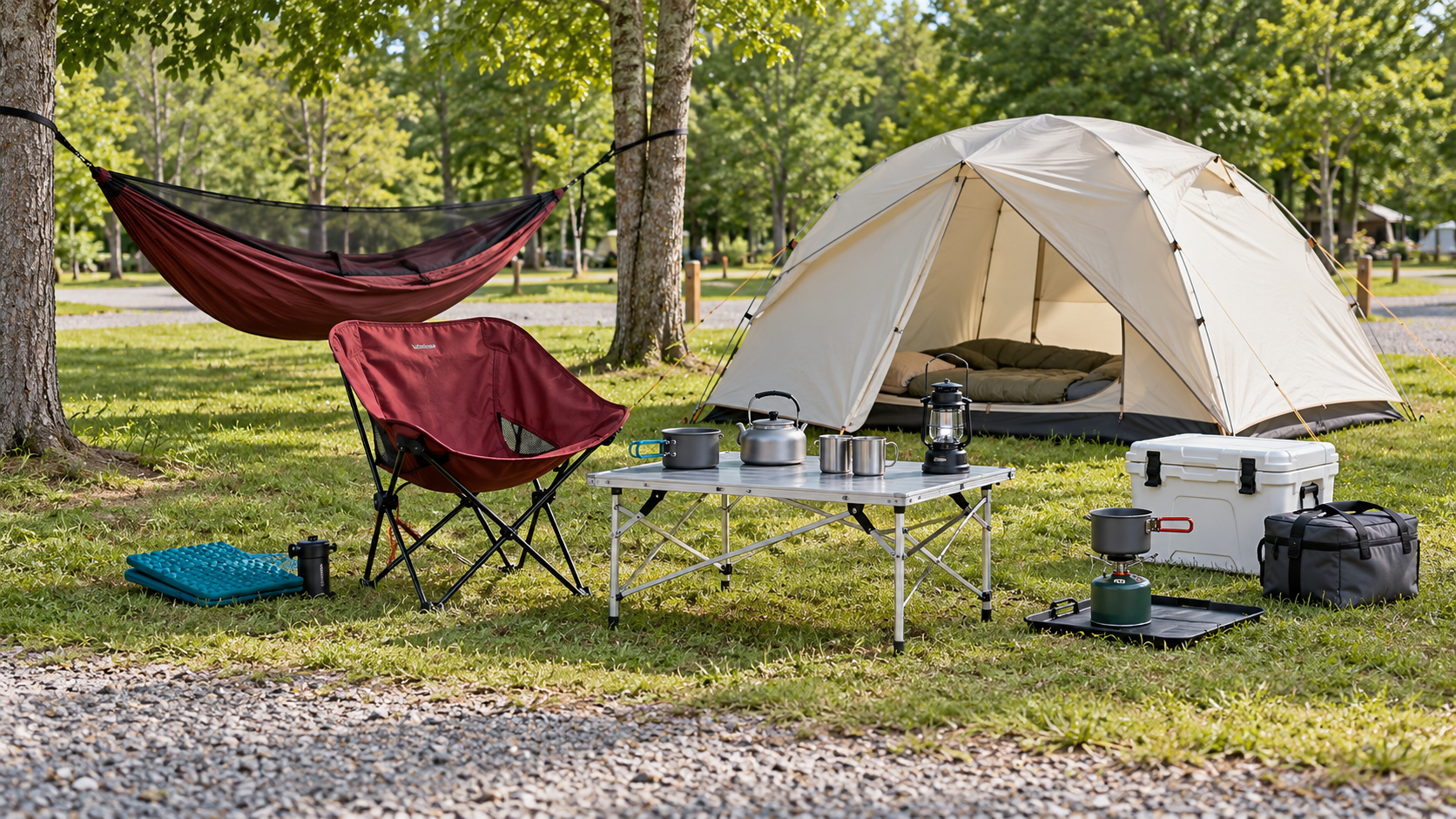
Weekend camping is one of the easiest outdoor activities for retailers to understand.
It does not require customers to be experienced outdoor enthusiasts. A customer may simply want to leave the city for a night or two, spend time outdoors, cook a simple meal, and relax with friends or family.
For retailers, this creates an opportunity to build a collection around the complete weekend experience, rather than selling camping products one category at a time.
Think About the Weekend, Not the SKU
A traditional product-based assortment might look like this:
- Camping Equipment
- Lighting
- Bags
- Cookware
- Accessories
A customer does not necessarily think this way.
They think:
“What do I need for a weekend camping trip?”
That question leads to a more useful merchandising structure.
A basic weekend camping collection can cover five stages:
Pack → Set Up → Cook → Relax → Pack Away
Each stage creates opportunities for different products.
1. Pack
Before leaving home, customers need to organize and transport their gear.
Potential products include:
- Outdoor bags
- Storage products
- Compact accessories
- Hydration products
- Portable equipment
For a retailer, products that are easy to store and transport can also be attractive because they are easier to merchandise and combine.
2. Set Up
Once customers arrive, they need to create a functional outdoor space.
The collection might include:
- Camping chairs
- Camping tables
- Lighting
- Storage
- Basic camping equipment
The goal is not to replicate a professional expedition setup.
For many weekend campers, the value is in making outdoor time more comfortable and convenient.
3. Cook
Food is an important part of the weekend camping experience.
Depending on the target customer, the collection may include:
- Camping cookware
- Cooking accessories
- Portable food-storage products
- Outdoor dining accessories
- Related functional tools
The exact assortment can be adjusted depending on whether the retailer wants to focus on simple weekend camping or a more complete camp-kitchen proposition.
4. Relax
This is where outdoor lifestyle products can expand a traditional camping assortment.
Customers may want:
- Comfortable seating
- Hammocks
- Outdoor lighting
- Leisure accessories
- Compact entertainment or lifestyle products
This is also an opportunity to position camping as more than equipment.
The customer is not simply buying gear.
They are buying a more comfortable way to spend time outdoors.
5. Pack Away
At the end of the trip, portability becomes important again.
Products that fold, compress, stack, or store easily can be especially useful.
This is one reason compact and multi-use products can have value across the entire camping journey.
Build the Collection Around Product Relationships
A strong collection is not simply a group of products with the same theme.
The products should have logical relationships.
For example:
Camping Chair
↓
Camping Table
↓
Outdoor Light
↓
Cooking Accessories
↓
Storage
A customer who enters through one product can discover several related products.
This creates natural cross-selling opportunities without requiring aggressive sales messaging.
Use Different Price and Commitment Levels
Not every customer entering a camping collection will have the same budget or experience.
A useful assortment can therefore include:
Easy-Entry Products
Lower-commitment items that customers can purchase without extensive research.
Core Equipment
Products that solve essential camping needs.
Comfort Products
Products that improve the outdoor experience.
Higher-Value or Differentiated Products
Products with additional features, stronger design, or a more specific use case.
This structure allows the collection to serve both casual and more engaged customers.
Multi-Use Products Can Strengthen the Collection
A product becomes more useful to a small retailer when it can appear in several collections.
For example, portable lighting can support:
- Weekend camping
- Vanlife
- Backyard living
- Road trips
- Emergency preparedness
Similarly, outdoor bags may work across camping, hiking, cycling, and travel.
This gives retailers more merchandising flexibility without requiring completely separate inventory for every customer scenario.
Keep the Collection Focused
A common mistake is trying to make a “complete camping collection” by adding everything associated with camping.
That can quickly become difficult to manage.
Instead, ask:
Does this product help the customer complete the weekend experience?
If the answer is unclear, the product may belong in another collection—or may not be necessary.
The collection should feel useful rather than overwhelming.
A Practical Retailer Checklist
Before building a weekend camping collection, define:
Target customer
- Families?
- Couples?
- Young outdoor consumers?
- Casual campers?
- Vanlife customers?
Trip style
- One-night weekend trips?
- Car camping?
- Campground camping?
- More remote outdoor use?
Core needs
- Shelter
- Seating
- Cooking
- Lighting
- Storage
- Comfort
Merchandising opportunities
- Complete collections
- Cross-selling
- Starter bundles
- Seasonal promotions
- Giftable accessories
Inventory considerations
- MOQ
- Product dimensions
- Packaging
- Freight
- Sample availability
- Reorder potential
From Camping Equipment to Outdoor Lifestyle
The most interesting opportunity for a small retailer may be the ability to move beyond a narrow definition of “camping gear.”
A weekend camping collection can include products that also make sense for:
- Backyard gatherings
- Beach trips
- Road trips
- Outdoor events
- Everyday leisure
This gives the retailer more flexibility and helps reduce dependence on a single outdoor activity.
The strongest collections are not necessarily the ones with the most products.
They are the ones where each product has a clear purpose, the products work together, and customers can easily understand how the collection fits into their lifestyle.
For independent retailers, that can be a more practical way to build an outdoor assortment—one weekend, one customer need, and one useful product combination at a time.

Leave a Reply
You must be logged in to post a comment.