
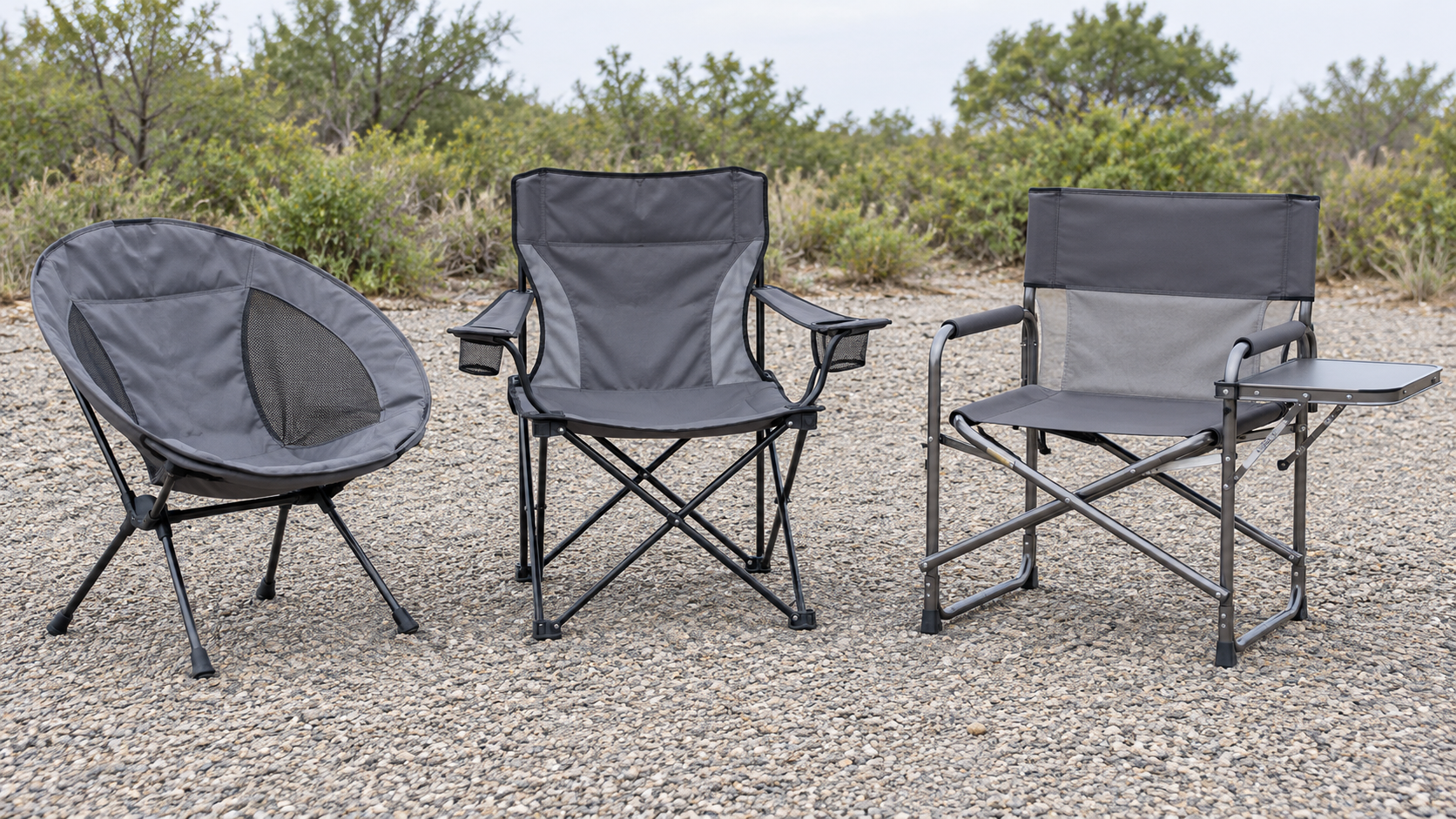
Camping chairs look simple.
For a retailer, however, choosing the right camping chairs can involve more decisions than simply comparing price and appearance.
A camping chair may be used at a campsite, beside a campfire, at a backyard gathering, during a road trip, at a beach, or even at an outdoor event.
That makes the category attractive for small retailers—but it also means that different chair designs serve different customer needs.
The goal is not to find one chair that works for everyone.
The goal is to build a selection where each product has a clear customer, use case, and reason to buy.
Start With the Use Case
Before comparing technical specifications, identify where the chair is expected to be used.
Weekend Camping
Customers usually value:
- Easy setup
- Comfortable seating
- Reasonable weight
- Packability
- Durability
- Easy transportation
A straightforward folding chair can work well for customers who want a reliable camping essential without complicated features.
Backyard Outdoor Living
For backyard use, portability may be less important.
Customers may care more about:
- Comfort
- Appearance
- Size
- Stability
- Materials
- Overall outdoor-lifestyle appeal
The same chair can therefore be marketed differently depending on the context.
Road Trips and Vanlife
For road-trip customers, storage efficiency becomes more important.
A compact folding design can be attractive because customers may need to store several outdoor products inside a limited vehicle space.
Beach and Day Trips
For beach or day-use customers, weight and portability can become especially important.
The easier a product is to carry from the vehicle to the destination, the more relevant those characteristics become.
The Five Things Retailers Should Compare
When evaluating camping chairs, start with five basic areas.
1. Portability
Ask:
- How easily does it fold?
- How compact is it when stored?
- Is there a carry bag?
- Can one person transport it comfortably?
Portability matters particularly for customers who move between locations.
2. Comfort
Comfort can be difficult to judge from a product photograph.
Consider:
- Seat dimensions
- Back support
- Seat height
- Armrests
- Overall sitting position
A chair designed for short breaks may have a different comfort profile from one intended for long evenings around a campfire.
3. Stability
A camping chair should feel appropriate for its intended environment.
Consider:
- Frame construction
- Leg design
- Base width
- Intended weight capacity
- Stability on outdoor surfaces
Retailers should always verify product specifications with the supplier rather than relying on appearance alone.
4. Setup and Storage
Customers generally appreciate products that are easy to understand.
A chair that can be unfolded quickly and packed away without complicated steps may be easier to demonstrate and sell.
This is particularly useful for online retail, where the product description needs to communicate the benefit clearly.
5. Product Positioning
Two chairs can perform similar basic functions but appeal to different customers.
One may emphasize:
Compact + lightweight + portable
while another emphasizes:
Comfortable + spacious + relaxed
Neither positioning is automatically better.
The important question is whether the positioning matches the customers you want to serve.
Don’t Build a Chair Assortment Around Color Alone
A common approach is to differentiate similar chairs through color.
For a small retailer, however, this can create unnecessary inventory complexity.
Instead, consider differentiating products through function:
| Product Role | Key Customer Need |
|---|---|
| Compact Chair | Portability |
| Standard Folding Chair | Everyday camping |
| Comfort-Oriented Chair | Longer outdoor sessions |
| Lightweight Chair | Hiking / travel |
| Lifestyle Chair | Backyard / leisure |
This creates meaningful differences between products.
Color can then become a secondary merchandising decision.
Look for Cross-Selling Opportunities
Camping chairs rarely need to be sold in isolation.
Consider what customers may need before, during, or after using the chair.
For example:
Camping Chair
→ Camping Table
→ Outdoor Lighting
→ Storage Bag
→ Drink Holder / Accessory
→ Camping Cooking Products
This creates a natural collection rather than a single-product purchase.
For a small retailer, cross-selling can also make a limited assortment feel broader.
Questions to Ask Your Supplier
Before adding a camping chair to your assortment, ask for:
- Product dimensions
- Folded dimensions
- Net weight
- Material information
- Weight capacity
- Packaging dimensions
- Carton quantity
- MOQ
- Sample availability
- Production lead time
- Available colors
- Customization options
- Product photos and specifications
For wholesale buyers, carton dimensions and packaging information are particularly useful because freight and storage costs can materially affect the economics of bulky products.
Sample Before Scaling
Camping chairs are a good example of why samples can be valuable.
Photos cannot fully communicate:
- Sitting comfort
- Frame rigidity
- Folding experience
- Fabric feel
- Actual packed size
- Perceived quality
A sample allows the retailer to evaluate the physical product before committing to larger quantities.
For small businesses, this can reduce the risk of building inventory around a product that looks attractive online but does not fit the expected customer experience.
Build a Small, Clear Selection
A small retailer does not necessarily need ten similar camping chairs.
A more manageable assortment might include products serving clearly different needs:
One compact option
For customers prioritizing portability.
One everyday option
For general camping use.
One comfort-oriented option
For customers who spend more time relaxing outdoors.
Additional products can then be introduced when customer demand justifies expanding the category.
Final Buying Checklist
Before adding a camping chair, ask:
- Who is the primary customer?
- Where will they use it?
- Is the product easy to transport?
- Is the comfort level appropriate?
- Is the packed size acceptable?
- Is the product meaningfully different from my existing chairs?
- Can I create a collection around it?
- Is the MOQ manageable?
- Can I obtain a sample?
- Can I explain the product’s main benefit in one sentence?
If you cannot clearly answer these questions, the product may need more evaluation before becoming part of your assortment.
For small outdoor retailers, successful product selection is rarely about finding the product with the most features.
It is about finding products with a clear customer, clear use case, and clear role in the assortment.

Leave a Reply
You must be logged in to post a comment.