
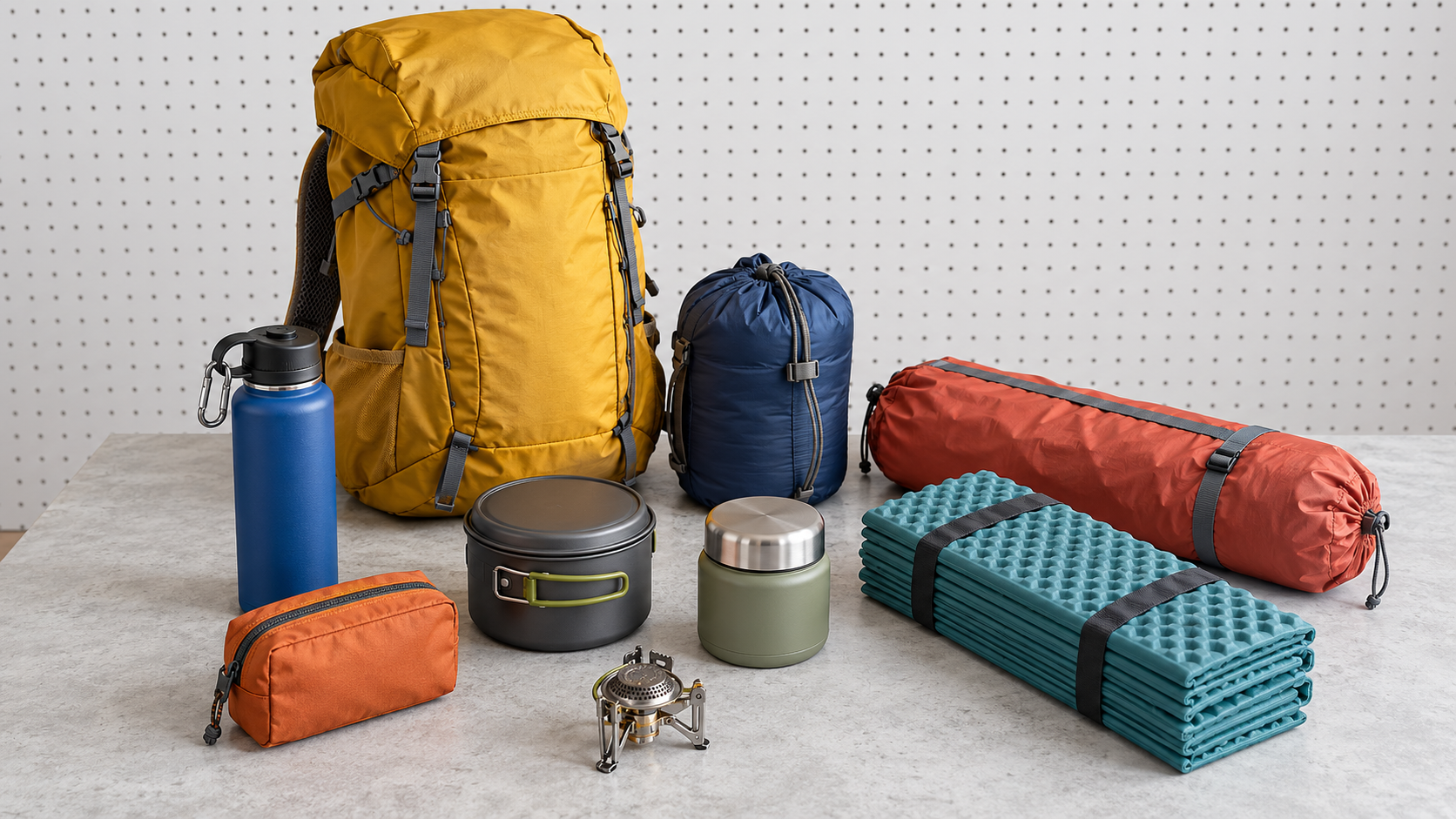
Launching a new outdoor category does not require a huge assortment.
In many cases, starting smaller can make the category easier to understand and manage.
Define the Customer
Start with the customer you already have.
Ask:
- What do they currently buy?
- What outdoor activities are relevant?
- Are they families, travelers, active consumers, or lifestyle shoppers?
- What price levels are realistic?
Choose a Narrow Starting Theme
Instead of “everything outdoors,” consider:
- Weekend camping
- Outdoor lifestyle
- Hiking & day adventure
- Road trips
- Cycling accessories
A focused proposition is easier to merchandise.
Select Core Products
Choose products that clearly support the theme.
Then add complementary products.
For example:
Weekend Camping
Chair → Table → Light → Storage → Cooking
This creates a coherent starting range.
Make the Collection Easy to Understand
Customers should quickly understand:
- What the collection is for
- Who it is for
- What products are included
- How products work together
Test Before Expanding
Do not assume that every product will perform equally.
Use early customer response to decide where to expand.
Refresh Gradually
Once the core collection is working, add:
- New products
- Seasonal products
- Complementary accessories
- Different price points
The category can grow with evidence rather than assumptions.

Leave a Reply
You must be logged in to post a comment.