
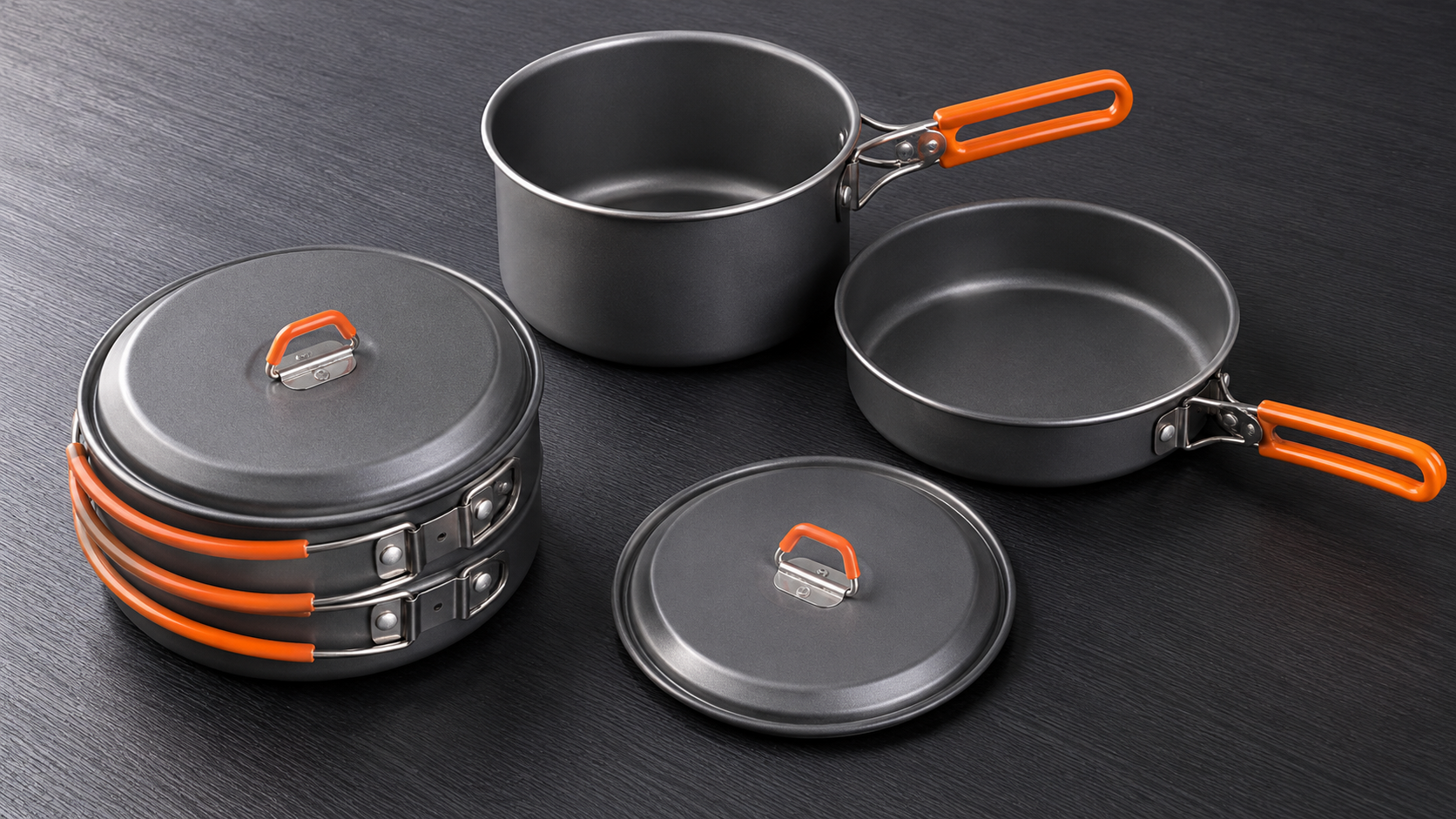
Camping cookware needs to balance functionality with portability.
Unlike a home kitchen, customers often need outdoor cookware that can be transported, packed, cleaned, and stored efficiently.
Start With the Cooking Scenario
Consider whether the target customer is:
- Cooking a simple meal
- Preparing food for a family
- Traveling by car
- Backpacking
- Setting up a campsite kitchen
These customers can have very different requirements.
Evaluate Material
Understand:
- Main material
- Weight
- Heat resistance
- Surface treatment
- Cleaning requirements
Product specifications should be clear and verified.
Think About Nesting and Storage
For camping products, efficient storage can be a major advantage.
Products that stack or nest can reduce:
- Packing space
- Storage requirements
- Transportation volume
This can benefit both the end customer and retailer.
Look at the Complete Cooking Setup
Cookware can be combined with:
- Cooking accessories
- Outdoor tables
- Storage
- Lighting
- Dining products
This turns a single product into part of a complete collection.
Keep the Assortment Focused
A small retailer does not need every pot, pan, plate, and utensil.
Start with products that support the main customer scenarios.
Then expand when there is evidence that customers need additional options.
Before Ordering
Confirm:
- Dimensions
- Weight
- Material
- Capacity
- Packaging
- MOQ
- Sample availability
- Care instructions
For cookware, actual sample inspection can be especially useful because surface finish, construction, and usability are difficult to judge from images alone.

Leave a Reply
You must be logged in to post a comment.