
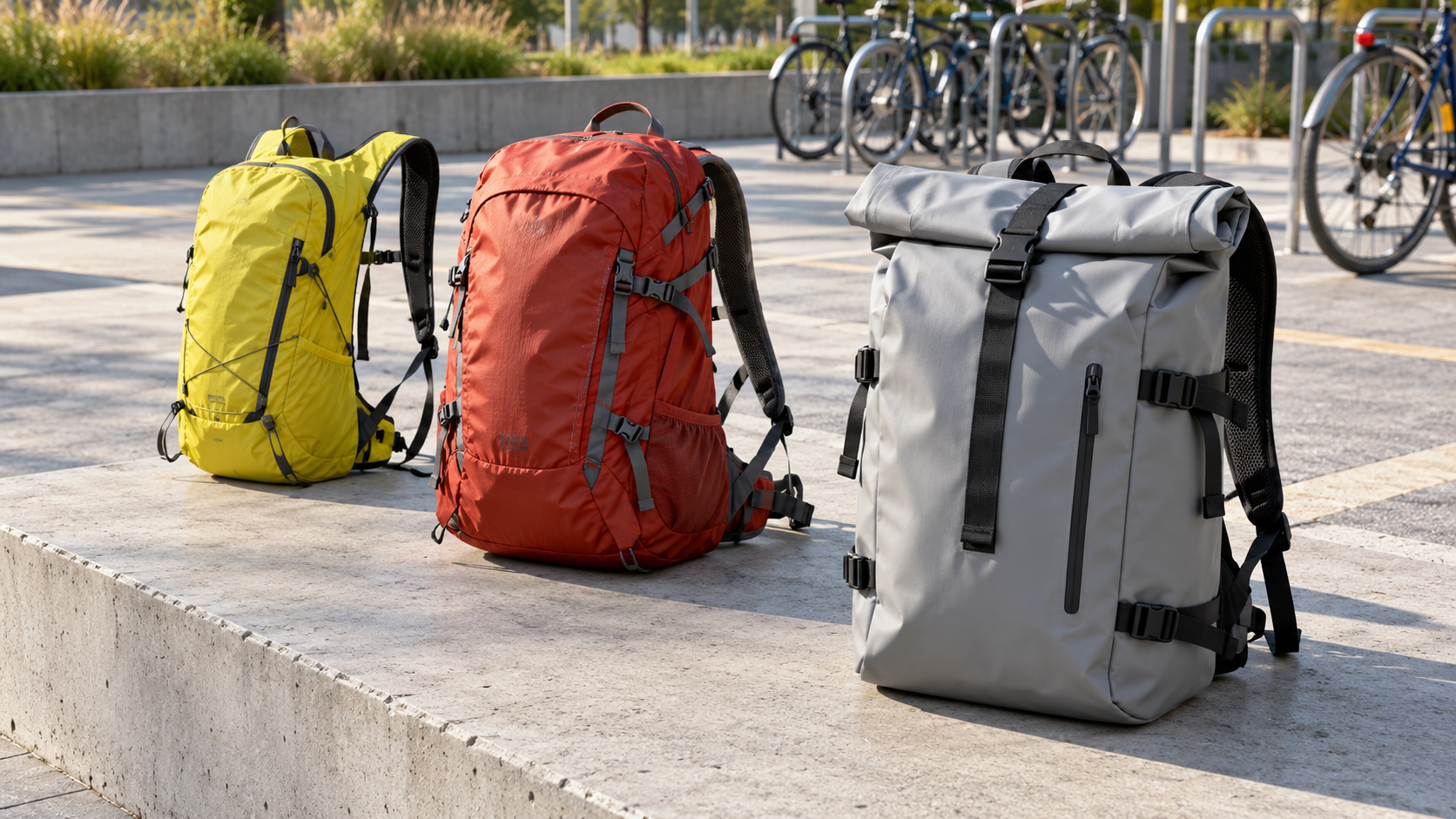
Backpacks can sit at the intersection of outdoor recreation, travel, cycling, commuting, and everyday life.
That makes them useful for a broad outdoor assortment—but also means retailers need to define the customer clearly.
Start With Capacity
Think about what the customer needs to carry.
A day-adventure customer may need space for:
- Water
- Snacks
- Clothing
- Personal items
- Small accessories
A travel customer may need a different internal organization.
Capacity should therefore be considered together with use case.
Comfort
Look at:
- Shoulder straps
- Back structure
- Weight
- Adjustment
- Ventilation
- Load distribution
The right combination depends on how the backpack is intended to be used.
Organization
Customers often value easy access.
Consider:
- Main compartment
- External pockets
- Small-item organization
- Bottle storage
- Dedicated compartments
Weather Considerations
For outdoor use, retailers should verify:
- Water resistance
- Waterproofing claims
- Zipper construction
- Material
Do not treat “outdoor” as automatically meaning waterproof.
Choose by Customer, Not by Liters Alone
Two backpacks with similar capacity can serve completely different users.
A better assortment might include:
Day Adventure
Compact and lightweight.
Travel
More organization and storage.
Outdoor Utility
Durability and practical access.
Cycling
Designed around riding requirements.
This gives each product a clear reason to exist.
Sample Evaluation
Before scaling a backpack, physically check:
- Actual capacity
- Comfort
- Zippers
- Stitching
- Material
- Pocket accessibility
- Packed appearance
These details are difficult to evaluate fully from a product page.

Leave a Reply
You must be logged in to post a comment.