
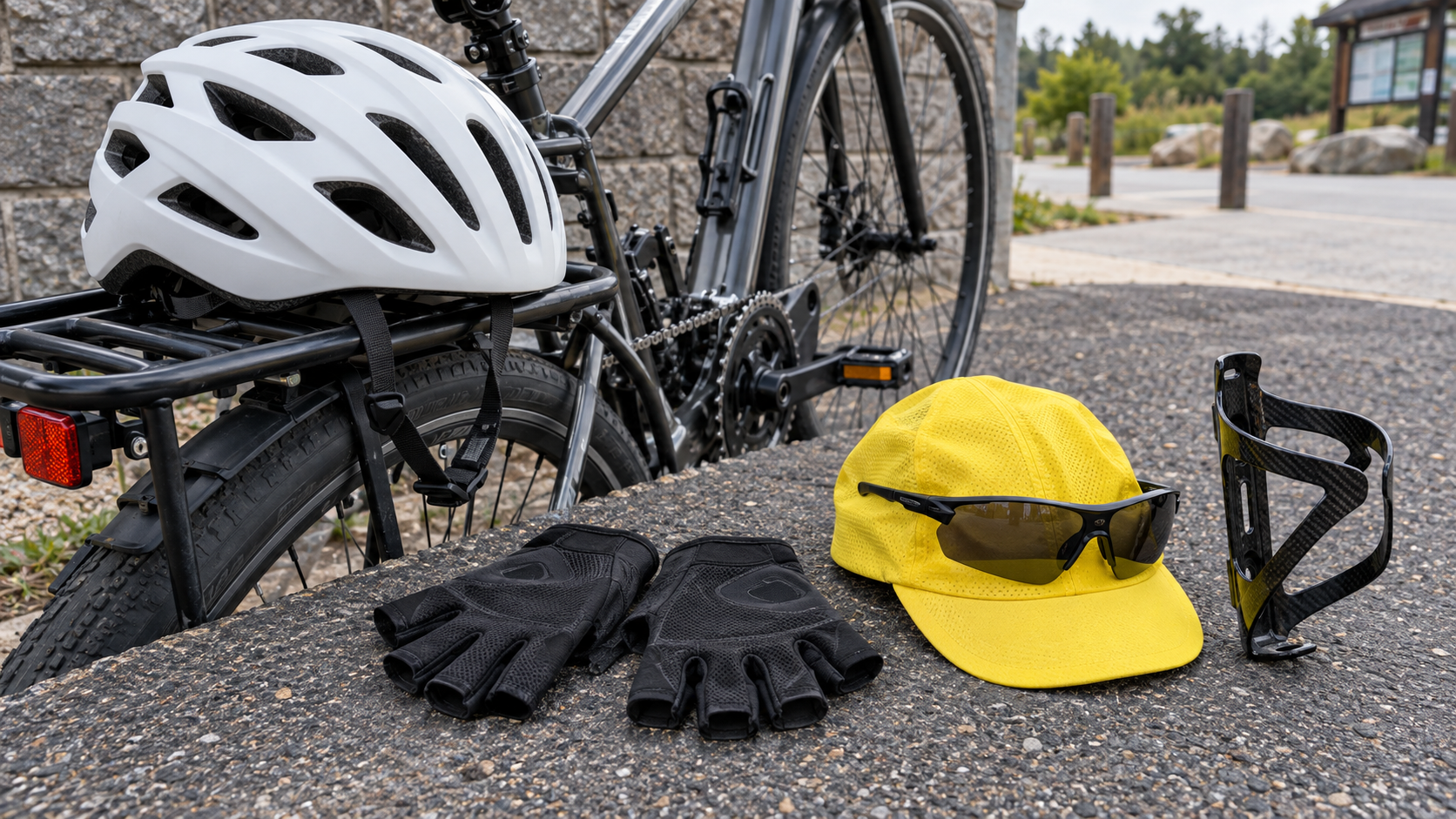
Starting or expanding an outdoor product category can be challenging for a small retailer.
Large outdoor retailers can carry hundreds or even thousands of products across camping, hiking, travel, cycling, and outdoor lifestyle. A small business usually cannot—and does not need to.
For independent retailers, the goal is not to build the biggest assortment. It is to build a focused assortment that gives customers enough choice without creating unnecessary inventory risk.
The right starting point is to think about products by customer need, use case, price point, and role within the assortment.
Start With Customer Needs, Not Product Categories
A common mistake is to start with a product list:
- Camping chairs
- Camping tables
- Lanterns
- Backpacks
- Hammocks
- Water bottles
- Outdoor accessories
This creates a catalog, but not necessarily a strong assortment.
Instead, ask:
What is the customer trying to do?
A weekend camper may need a chair, lighting, storage, and basic cooking equipment. A road-trip customer may be more interested in compact storage, travel accessories, lighting, and comfort products.
This approach allows a small retailer to sell several products around the same customer need.
Build Around a Few Core Outdoor Activities
For a small business, a practical starting point is to focus on several broad activities rather than trying to cover the entire outdoor market.
For example:
| Customer Activity | Potential Product Groups |
|---|---|
| Weekend Camping | Seating, tables, lighting, storage, cooking |
| Day Adventures | Backpacks, hydration, accessories, portable gear |
| Vanlife & Road Trips | Storage, lighting, travel accessories, comfort |
| Backyard Outdoor Living | Hammocks, lighting, seating, outdoor accessories |
| Cycling | Bags, hydration, safety and functional accessories |
| Beach & Summer | Shade, seating, bags, hydration, outdoor comfort |
The important point is that these activities overlap.
A portable light may work for camping, backyard evenings, road trips, and emergency preparedness. A compact storage product may be relevant to camping, travel, vanlife, and everyday organization.
Products with multiple use cases can therefore be particularly useful for a small retailer.
Think in Product Roles
Not every product in an assortment needs to perform the same job.
A balanced assortment can include several different product roles.
1. Entry Products
These are relatively easy products for customers to understand and purchase.
Examples may include:
- Small outdoor accessories
- Water bottles
- Compact lighting
- Basic camping accessories
- Functional travel items
Their role is to make it easy for a customer to try the category.
2. Core Products
These solve an obvious outdoor need and form the foundation of the assortment.
Examples include:
- Camping chairs
- Camping tables
- Backpacks
- Lanterns
- Storage products
- Outdoor cooking products
Core products should be easy to explain and relevant to the customers you already serve.
3. Complementary Products
These products help customers complete an activity.
For example:
Camping chair → portable table → outdoor light → storage bag
The individual products may be simple, but together they create a more useful shopping journey.
4. Differentiating Products
These products give the retailer something less generic to talk about.
They may have:
- A distinctive design
- A particular use case
- A compact or portable format
- A multi-use function
- A customization opportunity
These products do not necessarily need to represent the largest part of the assortment. Their role is to create interest and differentiation.
Avoid Building the Assortment Too Wide Too Early
A small retailer does not need every variation of every product.
For example, instead of immediately carrying many camping chairs in different colors, materials, and configurations, start by understanding which type of chair fits your customer.
Consider:
- How portable is it?
- How much space does it require?
- Who is the intended user?
- Is it primarily for camping, travel, backyard use, or multiple situations?
- Is the value proposition easy to communicate?
- Can it be paired with other products?
The same principle applies to lighting, bags, cookware, tables, and accessories.
Depth should follow evidence of demand—not come before it.
Use Multi-Use Products to Increase Assortment Efficiency
One useful strategy for independent retailers is to prioritize products that can appear in multiple collections.
For example, a portable outdoor light could be presented as:
- A camping essential
- A vanlife accessory
- A backyard lighting product
- A power-outage backup
- A travel companion
The product itself has not changed.
What changes is the customer’s reason for buying it.
This gives a small retailer more ways to merchandise the same inventory.
Build Collections, Not Just Product Lists
Customers do not always think in terms of wholesale categories.
They may think:
“I want products for weekend camping.”
or:
“I need a few things for my vanlife section.”
A retailer can therefore organize products into collections such as:
Weekend Camping
- Portable seating
- Compact table
- Outdoor lighting
- Storage
- Cooking accessories
- Hydration
Backyard Outdoor Living
- Hammocks
- Outdoor lighting
- Portable seating
- Outdoor accessories
- Comfort products
Road Trip & Vanlife
- Compact storage
- Travel bags
- Lighting
- Hydration
- Multi-use accessories
Collections make the assortment easier to understand and also create opportunities for cross-selling.
A Simple Starting Framework
For a new outdoor category, consider starting with a manageable mix:
Core products
Products that define the category.
Complementary products
Products that naturally support the core products.
Entry-level products
Lower-commitment products that make it easier for customers to purchase.
Differentiating products
Products that provide additional interest or a distinctive angle.
The exact number depends on your store, customer base, available inventory budget, and sales channels.
There is no universal “correct” number of SKUs.
The better question is:
Does every product have a clear reason to be in the assortment?
Before You Place a Wholesale Order
Use a simple checklist:
- Does this product match my target customer?
- What problem or activity does it address?
- Can I explain its value quickly?
- Does it have one or more clear use cases?
- Can it be sold together with other products?
- Is the MOQ appropriate for my business?
- Can I test the product before committing to larger quantities?
- Is the product easy to merchandise online or in-store?
- Does it add something new to my current assortment?
- What would make me reorder it?
These questions help shift the buying process from “Which products look interesting?” to “Which products have a clear role in my business?”
Start Focused, Then Expand
For independent outdoor businesses, assortment development is usually an ongoing process.
You can begin with a focused selection around several customer activities, observe which products attract attention and repeat purchases, and gradually expand the categories that make sense for your business.
The objective is not to compete with large retailers on assortment size.
It is to create a selection that is relevant, manageable, easy to merchandise, and useful to your customers.
That is often a more practical foundation for building an outdoor category as a small business.

Leave a Reply
You must be logged in to post a comment.