
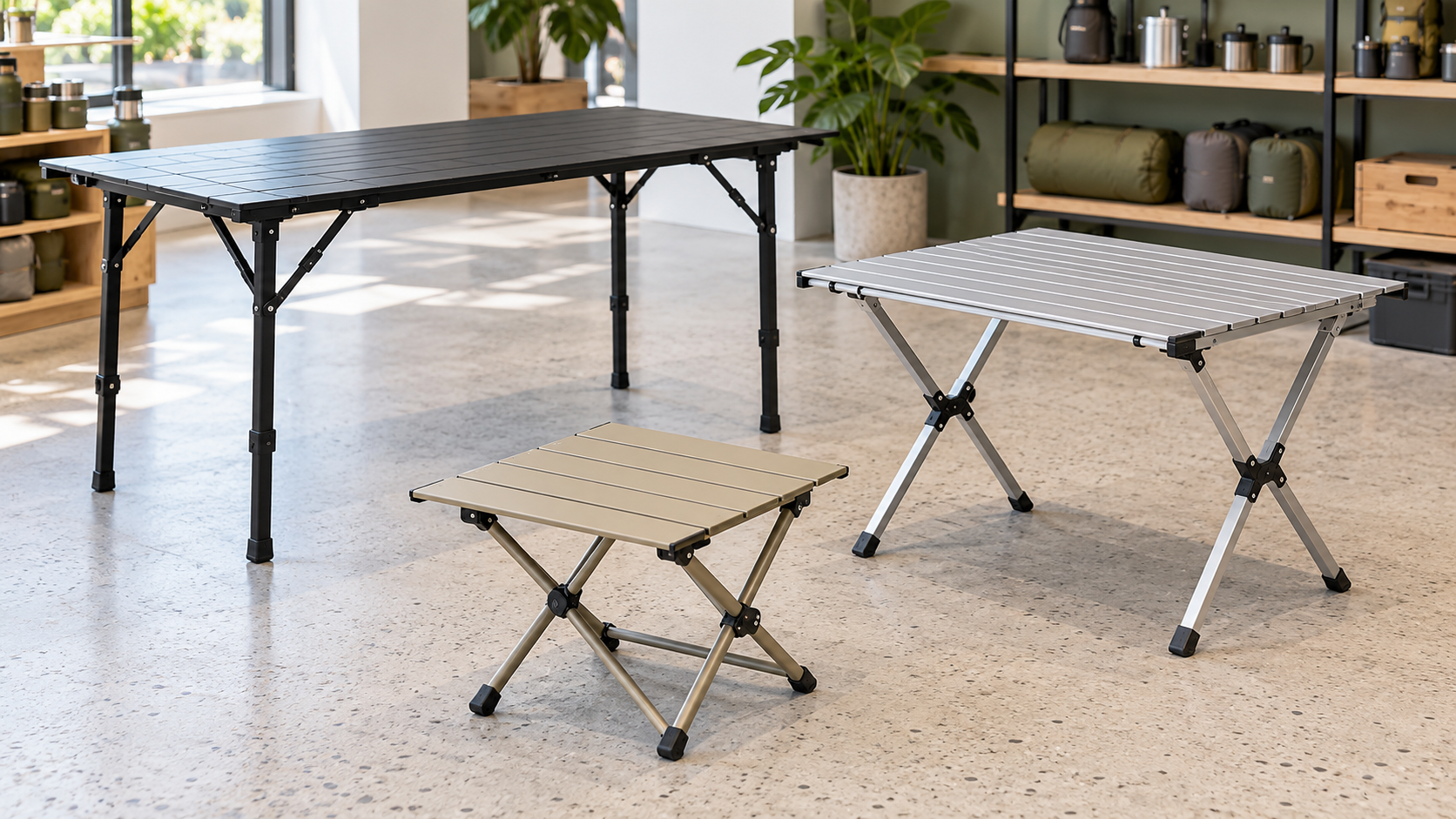
Camping tables serve several functions.
They can be used for meals, cooking, equipment organization, games, or simply creating a more comfortable campsite.
For retailers, the key is to understand how different table designs match different customer needs.
Size and Portability
Start with:
- Open dimensions
- Folded dimensions
- Weight
- Carrying method
- Storage requirements
A table that looks compact in a photograph may still occupy considerable space when packaged.
Height
Different heights support different uses.
A lower table may suit relaxed outdoor activities, while a standard-height table may be more useful for dining or food preparation.
Surface Area
Larger is not automatically better.
Customers need enough working or dining space, but excessive size can make transportation and storage harder.
Stability
Evaluate:
- Frame
- Legs
- Locking system
- Surface construction
- Intended load
These details should be verified through product specifications and samples.
Match the Table With Other Products
A camping table becomes more commercially useful when it can be paired with:
- Camping chairs
- Outdoor lighting
- Cooking products
- Storage
- Dining accessories
The objective is to create a complete use case.
Questions for Suppliers
Before ordering, confirm:
- Product size
- Folded size
- Product weight
- Weight capacity
- Materials
- Packaging
- Carton quantity
- MOQ
- Sample availability
- Lead time
For larger tables, freight and warehouse considerations can be particularly important.

Leave a Reply
You must be logged in to post a comment.